Water Damage Restoration in New York City
A riser let go in the wall, the upstairs neighbor left the tub running, or the cellar took on water in last night's storm. Tell us what you are looking at and we get the response moving.
- A person picks up 24 hours a day, 365 days a year
- Manhattan, Brooklyn, Queens, the Bronx and Staten Island
- Apartments, co-ops, condos, row houses and cellars
- Written scope before any plaster comes down
Water damage in New York City is mostly a vertical problem. In a city where 54 percent of the housing was built before 1947, according to the 2023 NYC Housing and Vacancy Survey, the typical call comes from an apartment in a multi-unit building, and the water started somewhere else: a corroded riser behind the plaster, a neighbor's overflowing bathtub two floors up, a radiator valve that finally gave out in January. By the time a brown ring shows on your ceiling, the joists above it have been wet for a while, and the apartment below yours may be next.
That changes the order of work. The source has to be found and shut, which in a shared building often means the super and a plumber before any drying starts. The wet area gets mapped with meters through plaster and lath, because pre-war walls hide water better than drywall does. Then the question of who is paying gets sorted with the board or the landlord while the equipment runs. Whoever attends the property arrives with a certificate of insurance ready for management, an equipment list, and a plan for the freight elevator, because in this city the building decides when the air movers come in.
Water Damage Services Across New York City
Fourteen services that between them cover a job from the first call to the last coat of paint.
Water Damage Restoration
The whole job for New York apartments, co-ops and houses, from the first extraction pass to the last coat of paint.
Read more →Emergency Water Extraction
Standing water pulled out before it drops through the ceiling of the apartment below.
Read more →Burst and Frozen Pipe Water Damage
Split risers, frozen lines on exterior walls, failed radiator valves and the washer hose that let go on a Sunday.
Read more →Ceiling Leak Water Damage
The stain that came from the apartment upstairs, and the plaster ceiling that is starting to sag under it.
Read more →Basement and Cellar Flooding
Below-grade units, sidewalk hatches and finished basements in row houses, where every storm finds a way in.
Read more →Sewage Backup Cleanup
Category 3 water from a combined sewer surcharge or a blocked house trap, handled with containment and removal.
Read more →Storm and Flood Damage Cleanup
Cleanup after a cloudburst overwhelms the street drains or coastal water reaches the block.
Read more →Structural Drying and Dehumidification
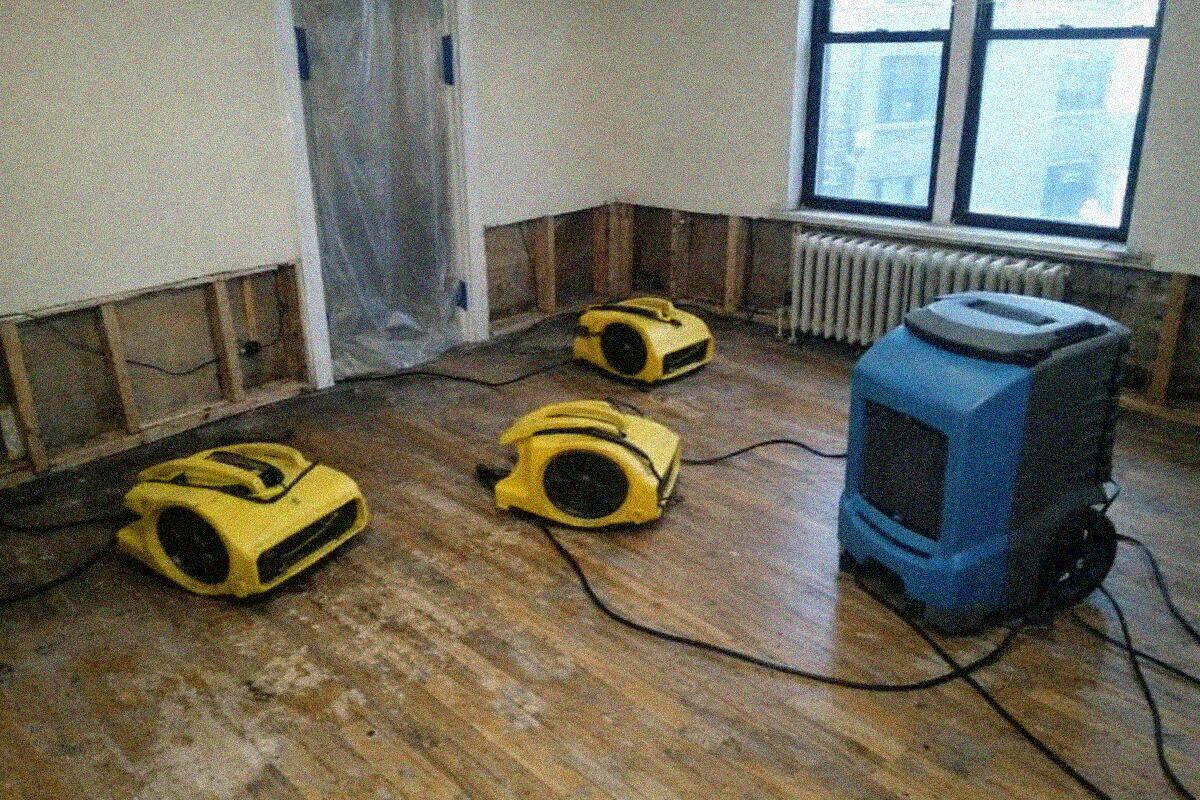
Air movers and dehumidifiers sized to the room, with readings taken daily until the plaster and joists are dry.
Read more →Hardwood Floor Drying
Drying mats and controlled dehumidification for oak strip and pre-war parquet before it cups past saving.
Read more →Moisture Detection and Leak Location
Meters and thermal imaging to find where the water went inside plaster, lath and shared walls.
Read more →Mold Remediation
Containment, removal and clearance under the New York State mold licensing law, with the assessor kept separate.
Read more →Apartment and Co-op Water Damage
Leaks that cross unit lines, and sorting out who is responsible for what under a proprietary lease or condo bylaws.
Read more →Water Damage Repairs and Reconstruction
Plaster, drywall, skim coat, paint, trim and flooring, with the handoff from drying to rebuild agreed in writing.
Read more →Contents Pack-Out and Storage
Belongings photographed and listed before anything goes down the elevator, then stored and returned.
Read more →What Types of Water Damage Do We Deal With?
The source of the water decides how contaminated it is, how far it has traveled through the building, and who is going to be responsible for the bill.
Riser and Supply Line Failures
A pressurized riser keeps pushing water through the stack until the building shuts the valve, and in a pre-war building that valve may serve twenty apartments. Galvanized steel and cast-iron risers installed before 1940 corrode from the inside and let go without warning, usually behind a plaster wall where nobody sees the first drip. With about 2 million NYC units dating from before 1947 per the 2023 Housing and Vacancy Survey, original risers are the ordinary condition here, and a burst on the ninth floor becomes a ceiling collapse on the sixth.
The Apartment Upstairs
A leak from the unit above is the most common water damage call in New York, and the responsibility question is as much of the job as the drying. The water usually arrives as a stain around a light fixture or a bulge in the plaster, having pooled on the lath before it soaked through. In a rental the landlord owes the warranty of habitability and the fix; in a co-op the building repairs pipes and structure first and pursues the negligent shareholder afterwards; in a condo the declaration draws the line between unit and common element. Each route needs the same photographs and the same moisture log.
Con Edison Steam and Heating System Leaks
Manhattan is the only borough with a district steam system, which Con Edison runs from the Battery to 96th Street and describes as serving more than 3 million New Yorkers. A building-side steam leak or a failed radiator trap produces hot, mineral-laden water that cooks paint off plaster and warps parquet in an afternoon, and it can carry dust from old pipe insulation with it. Steam and hydronic heating failures peak in the first cold week of the season, when valves that sat idle all summer are asked to hold pressure again.
Basement and Cellar Flooding
The NYC Comptroller counted 424,800 basements and cellars in one-to-three-family homes in 2022 and put 43,000 of them at current flood risk, rising to 136,200 by the 2050s. Water comes in through sidewalk hatch doors, areaways, window wells and the floor drain when the combined sewer surcharges. NYC draws a legal distinction between a basement, which sits at least half above curb level, and a cellar, which sits more than half below, and that distinction affects whether the space can lawfully be lived in and what an insurer will look at.
Sewage and Combined Sewer Backups
DEP resolved 2,851 sewer backup complaints in fiscal year 2024, a 32 percent rise on the year before, per the Mayor's Management Report, and it names grease as the most common cause. Most of the city runs on combined sewers that carry rain and sewage in the same pipe, so a cloudburst pushes the contents back up the lowest fixture on the block, typically a cellar floor drain or a ground-floor toilet. That water is Category 3 under the IICRC S500 standard, and every porous material it touches comes out.
Storm Runoff and Coastal Flooding
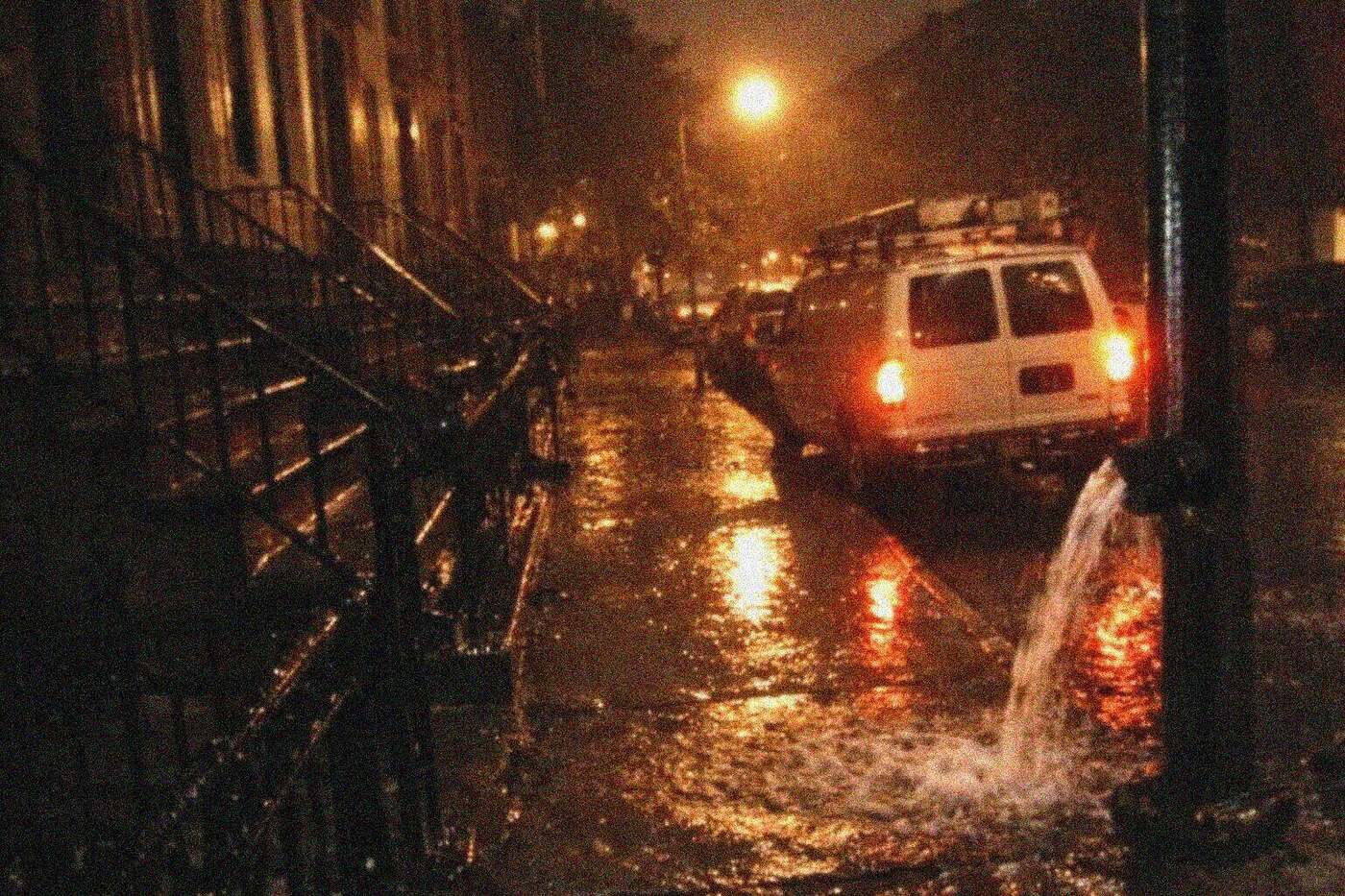
During the remnants of Hurricane Ida on 1 September 2021, 3.47 inches of rain fell in a single hour at Central Park against a sewer system designed for 1.75 inches an hour, according to the NYC Department of Health. Fourteen New Yorkers died, ten of them by drowning in basement apartments. Rebuild by Design estimates 1.3 million residents, 14 percent of the city, live in or next to the 100-year floodplain. Cellars in Canarsie, Gowanus, Flushing, Jamaica, the Rockaways and the Staten Island East Shore fill first when the street drains fall behind.
Frozen Pipes on Exterior Walls
Supply lines run inside the exterior walls of row houses and older apartment buildings, and pipes in unheated cellars, rear extensions and vacant units freeze first. The pipe splits while frozen and floods when it thaws, so the damage shows up on the first mild day after a cold snap. NYC DEP publishes guidance on keeping private-side pipes from freezing because the property owner is responsible for everything on their side of the curb valve.
Appliance and Fixture Overflows
A washing machine hose, a dishwasher supply, a refrigerator ice-maker line or a stuck toilet fill valve can run for hours while everyone is at work. In a house that means a wet floor. In an apartment it means water tracking down the stack through every ceiling below, and internal data from the calls we field shows the downstairs neighbor is often the first person to notice, phoning about a ceiling drip while the source unit is still empty.
What Types of Water Damage Services Do We Arrange?
Every job is a sequence, and the contractors we dispatch are asked to run it in order: stop the source, extract, dry against a measured standard, remove what will not dry, then rebuild.
Emergency Water Extraction
Standing water is pumped and vacuumed out before it can drop through the floor into the apartment below. On a wood-joist floor with plaster ceilings, the ceiling underneath can hold several gallons before it fails, so extraction on the source floor is what protects the neighbor. Truck-mounted units rarely reach a twelfth-floor apartment, so portable extractors ride the freight elevator, and the building's freight hours decide how quickly that happens.
Structural Drying and Dehumidification
Air movers and low-grain refrigerant dehumidifiers are set to the room volume and the class of water loss, and readings are taken every day at marked points until the material matches a dry standard from an unaffected wall. On a Category 1 loss caught early the IICRC S500 standard puts typical equipment time at three to five days. Plaster on lath, terracotta block and concrete slab all dry slower than drywall, so pre-war jobs run at the long end.
Ceiling and Upstairs Neighbor Leaks
The ceiling is opened at the wettest point, the source is traced back to the apartment or riser above, and the responsibility is documented so the right party pays. A saturated plaster-on-lath ceiling weighs far more than drywall and comes down without much warning, which is why a bulging ceiling gets a controlled opening and a bucket before it chooses its own moment.
Sewage Backup Cleanup
Category 3 water gets containment, negative air, removal of everything porous it touched, and antimicrobial treatment of the hard surfaces that remain. DEP says it inspects sewer backup reports inside a six-hour window and issues a Notice to Repair when the fault is on the private service line, which the owner is responsible for all the way to the main.
Mold Remediation Under Article 32
Mold covering more than ten square feet is a licensed project under New York State Labor Law Article 32. An independent licensed Mold Assessor writes the work plan and does the clearance, and a separately licensed Mold Remediation Contractor does the removal, because section 936 of the law forbids one licensee doing both on the same property. The US EPA gives 24 to 48 hours as the window in which wet materials can start supporting growth, which is why drying starts the same day the water stops.
Hardwood and Parquet Floor Drying
Pre-war quartersawn oak parquet and herringbone can often be dried flat with drying mats and controlled dehumidification if the work starts before the boards cup past recovery. Replacing a matching pre-war pattern costs several times what refinishing does, so drying in place is a real money decision in a New York apartment.
Contents Pack-Out and Storage
Belongings are photographed and listed on an inventory before anything leaves the apartment, then moved to off-site storage while the drying and rebuild run. New York apartments have no garage to move things into, and StorageCafe put the citywide average for a 10 by 10 unit at 271 dollars a month in August 2026, which is a line item worth knowing about before the boxes go down the elevator.
Water Damage Repairs and Reconstruction
Plaster patching, skim coat, drywall, paint, trim and flooring, with the point where drying ends and rebuilding starts agreed in writing. On one-to-two-family homes the contractor holds a NYC DCWP Home Improvement Contractor license; in a multi-unit building the board's alteration agreement and any DOB permitting come first, and any plumbing work is done by a NYC Licensed Master Plumber.
What Goes Wrong on Water Damage Jobs
Review corpora for the national restoration brands that franchise into New York repeat the same handful of failures, and most of them happen after the water is gone.
The invoice arrives with no estimate before it
The most frequent complaint across the national review corpora is a bill far above anything discussed, on a job that started under stress with nothing written down. A scope with a price attached, produced before the first wall is opened, is the document that prevents it, and it is fair to insist on one before signing anything.
Nobody calls back once the paperwork is signed
Communication stops after the contract, and the resident spends weeks phoning a dispatcher who cannot say who is running the job. One named person from the first call to the final walkthrough is the fix, and their direct number should be on the scope.
Dry in a week, then months of nothing
The stall between drying and reconstruction is the single most consistent failure in the corpus: equipment out in seven days, then a rebuild that drifts for a season while the apartment sits open. The handoff has to be named in writing, with who is doing each part, before the last dehumidifier leaves.
Equipment days that keep counting
Air movers and dehumidifiers bill by the day, and reviewers describe machines left running long after the readings hit target, or charged for while switched off. A daily moisture log with equipment logged in and out lets you check the invoice against the drying.
Damage to the apartment, then a denial
Scuffed lobby walls, a gouged parquet floor, a broken elevator pad, and a crew that says it was already like that. Photographs of the route and the room before any equipment moves protect both sides, and a doorman building will usually require them anyway.
Belongings that never come back from storage
Pack-out complaints center on items missing at return, with no list to prove they were ever taken. A photographed inventory signed at the door, with each box numbered, is the only record that holds up.
Each of these has a document that prevents it: a written scope, a named contact, a moisture log, a handoff date and an inventory. Ask for all five and the job runs the way it should.
Why New Yorkers Call This Number
A written scope and price before any wall is opened
Whoever attends the property maps the wet area with meters first and puts the plan on paper, with the price attached, before demolition starts. A change to that scope needs your sign-off, and the same document is what the co-op board, the landlord and the insurer will ask to see.
Licensed contractors under NYS Article 32 and NYC DCWP rules
The contractors we dispatch hold a NYS Department of Labor Mold Remediation Contractor license for any mold project over ten square feet, with an independent licensed Mold Assessor doing the assessment and clearance, plus a NYC DCWP Home Improvement Contractor license for work on one-to-two-family homes and EPA Lead-Safe certification for pre-1978 paint. Both licenses are checkable on public lookups, and you should check them.
Daily moisture readings you can hold in your hand
Readings are taken at the same marked points every day and logged on paper against a dry standard taken in an unaffected room on the same kind of wall or floor. The IICRC S500 standard puts a clean-water job caught early at three to five days of equipment time, and the log is how you know the machines came out on the right day.
Water Coming In Right Now?
A person answers at any hour. Say which borough, what the water came from and which rooms are wet, and we will get the response moving.
The phone is picked up 24 hours a day, seven days a week, on every holiday in the year.
Four Numbers Worth Knowing Before You Call Anyone
Hiring a Water Damage Contractor in NYC
The warning signs, the licenses to check, and the four documents to ask for before anyone opens a wall in your apartment
- Twelve warning signs, from the hallway contract to the missing moisture log
- How to look up a DCWP Home Improvement Contractor license and a New York State mold license
- The four documents to ask for on any water damage job
- Eight questions that separate a straight operator from the rest
Where We Work in New York City
Every borough has its own page, written around its building stock, its flood zones and the way water tends to arrive there.
Questions New Yorkers Ask
How fast can someone get to my apartment?
A person answers the phone at every hour of every day, including holidays, and the response starts on that call. Arrival in this city depends on the borough, the time of day and the building's own access rules, so you get a straight answer about the timing while you are on the line. Meanwhile, shut the source if you can reach the valve, cut power to the wet room at the breaker, and photograph everything.
The leak came from the apartment above me. Who pays?
It depends on how you hold the apartment. A tenant looks to the landlord, who owes the warranty of habitability, and reports through the super and then 311 if nothing happens. A co-op shareholder looks to the corporation, which repairs pipes and structure first under the proprietary lease and typically recovers from a negligent shareholder afterwards. A condo owner checks the declaration for where the unit ends and the common elements begin. In every case, file on your own HO-4 or HO-6 policy first and let the carriers sort out subrogation between themselves.
Does my building need anything before drying equipment comes in?
Most doorman buildings, co-op boards and management companies want a certificate of insurance naming the building, an equipment list and a written access plan on file before anything comes through the service entrance. Freight elevator hours and alternate-side parking decide when the equipment arrives, so the super or managing agent is called early.
What does water damage restoration cost in New York City?
Published 2026 national surveys from Angi and HomeGuide put mitigation at 3.75 to 7.50 dollars per square foot depending on the water category and the materials, and New York labor, parking, insurance and building logistics place most jobs at or above the top of that range. Category 3 water, hardwood and plaster, and a delay of more than a day all push the number up. Reconstruction is priced separately and is often the larger half. You get a written range after the meters have been through the wall, because any number given over the phone would be a guess.
Will there be mold, and who is allowed to remove it?
The US EPA puts the window before growth starts at 24 to 48 hours on wet building materials, so drying that begins the day the water stops usually keeps mold out of the job. If growth is found over ten square feet, New York State Labor Law Article 32 requires a licensed Mold Assessor to write the plan and clear the work and a separately licensed Mold Remediation Contractor to do it. The contractors we dispatch hold the remediation license and work with independent assessors.