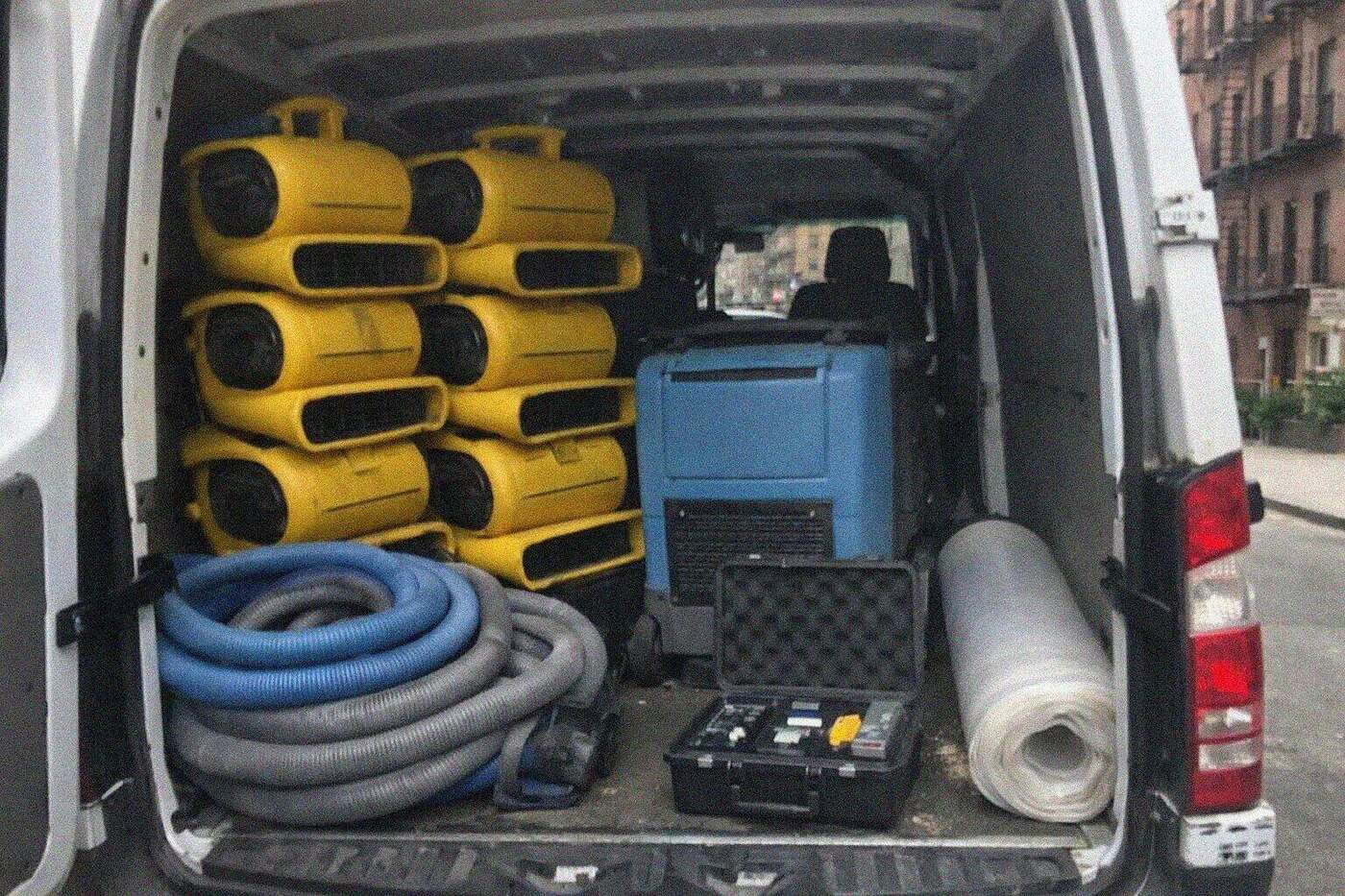
Water Damage Repairs and Reconstruction in New York City
Plaster, drywall, trim, floors and paint go back only after the readings say the wall is dry, on a scope agreed before the drying ends.
Water damage repair is the rebuild after the drying: the plaster or drywall that was cut out goes back, the trim is matched, the floor is refinished or relaid, and the room is painted. It is the half of the job that most people picture when they think of restoration, and it is the half that most often stalls, because the drying contractor and the repair contractor are two different trades with a gap between them that nobody owns. On the jobs we route, the handoff is agreed in writing before the equipment comes out, with the scope, the start and who is doing which part.
The rule that governs all of it is that nothing closes over wet material. A moisture reading against a dry standard is the permission to hang drywall, skim plaster or lay a floor, and a rebuild started a day early to hit a date is a rebuild that gets opened again for mold. In a pre-war apartment the repair also involves three-coat plaster, casings and baseboards that have been in the building since the 1920s, and paint that predates 1978, so the trades and the licenses on the job matter as much as the schedule.
What Water Damage Repairs Include
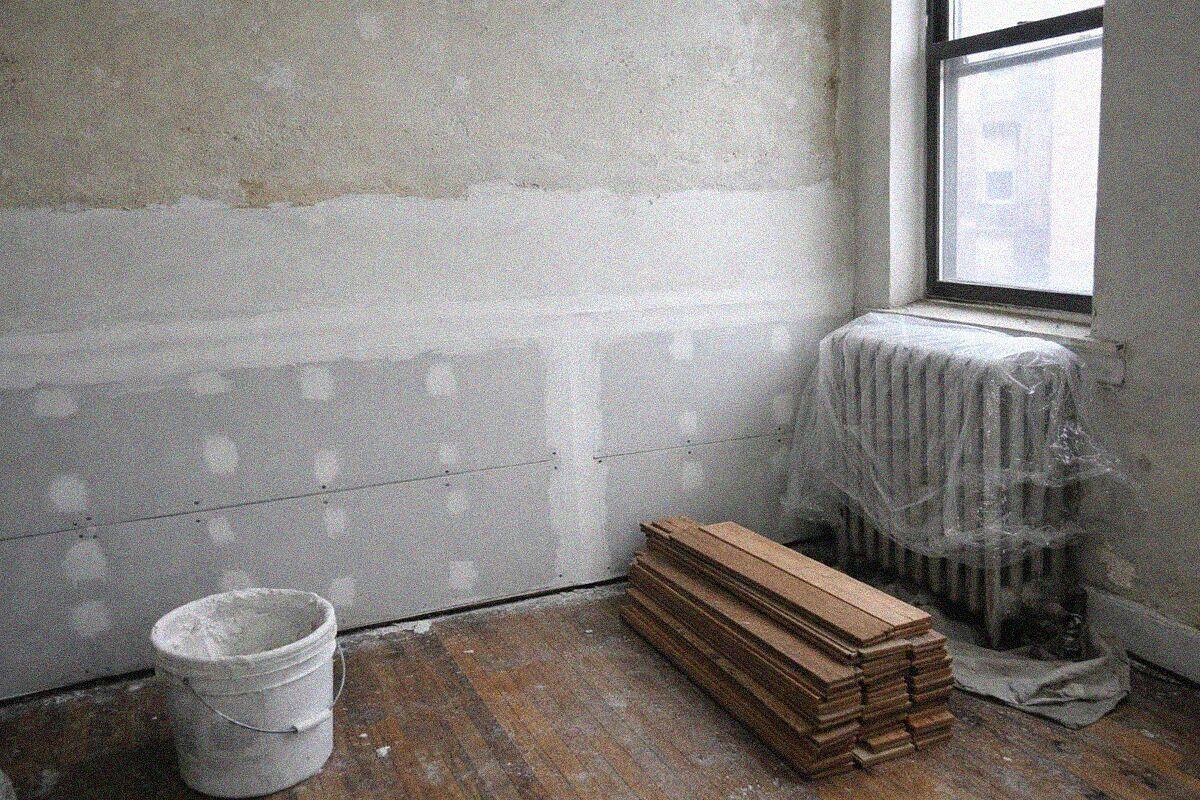
Repairs cover everything from the cut line out: closing the walls and ceilings, replacing or refinishing floors, reinstalling or replacing baseboards, casings and cabinets, and painting to a finish that matches the rest of the room. Any plumbing that failed is a separate line done by a Licensed Master Plumber, and any mold work has to have been cleared by the independent assessor before the wall closes. The scope is written from the drying record, which says what was removed and where, so the repair matches the demolition.
- Drywall patching or full-sheet replacement, taped and finished to match the surrounding level
- Plaster repair: a skim coat over sound plaster, or a new base and finish coat over the lath where the plaster came out
- Ceiling repair, including replacing sagging plaster with blueboard and a veneer plaster finish where the board will let it
- Trim: reinstalling salvaged pre-war baseboard and casing, or milling replacement to profile
- Floors: refinishing dried hardwood, relaying parquet blocks, or replacing subfloor and finish where the floor came up
- Cabinet bases, vanities and built-ins that were removed for drying
- Priming and painting, with lead-safe practices where the existing paint predates 1978
Plaster Skim or Drywall Patch: Matching What Is There
A pre-war wall is repaired in plaster, or the patch shows forever.
Most New York apartments built before the Second World War have walls of three-coat plaster on wood or metal lath, and a drywall patch set into a plaster wall reads as a patch: the surface texture is different, the edges telegraph through paint, and the sound is different when you knock on it. Where the plaster is sound and the cut was small, the repair is a plaster patch on the existing lath, finished with a skim coat feathered into the old surface. Where a large area came out, the usual method is to hang blueboard, which is drywall made to take plaster, and apply a veneer plaster finish so the wall matches the rest of the room in texture and hardness.
Post-war and modern buildings are drywall, and there the patch matches with a proper tape-and-finish and a full-wall prime and paint. Finish level matters: a patch finished to a lower level than the wall around it shows under the raking light from a window. The scope names the method for each wall so the price reflects it, because a plasterer is a different trade at a different rate from a drywall finisher.
Ceilings deserve their own line. A pre-war plaster ceiling that sagged from a leak is heavy and hazardous, and where it came down the replacement is board and veneer plaster with the crown molding or cornice reinstated or replicated in plaster or a matching profile. That work takes longer than a flat ceiling patch and the scope should say so.
Matching Pre-War Trim, Doors and Floors
Baseboards in a 1920s apartment are often eight or ten inches of stepped profile with a separate shoe, and casings around doors and windows carry a molding that has not been stocked in decades. The first choice is to save the original: remove it carefully before the drying, label it by wall, dry it, and reinstall it. Where it was too wet or too damaged to keep, a millwork shop can run a replacement to the profile from a sample, which costs more than stock trim and is the only way the room looks right. The scope says which walls get salvaged trim and which get milled, and who is paying the difference.
Floors follow the same logic. A pre-war parquet or herringbone floor that was dried in place is refinished; one that came up in part is relaid with matching blocks and the whole room sanded and finished so the repair does not show. Strip oak in a post-war building is easier to match with new material. The drying record is what tells the repair contractor whether the floor and subfloor are at a stable moisture content, and the refinisher does not start until they are.
Licenses on a New York Repair Job
On a one- or two-family house anywhere in the five boroughs, the contractor doing home improvement work has to hold a New York City Department of Consumer and Worker Protection Home Improvement Contractor license, which comes with a bond or trust fund enrolment and workers' compensation on file with the City. The contractors we dispatch for house repairs hold it, and the number can be checked with DCWP. Ask for it before signing anything.
In a multi-unit building the framework is different. The co-op or condo board's alteration agreement governs who may work in the building, at what hours, with what insurance, and it often requires that the contractor be approved by the managing agent. Work that touches plumbing, structure or a change of layout needs Department of Buildings permits, and any plumbing repair at all, from a burst riser to a replaced trap, is done by a New York City Licensed Master Plumber, who is also the person DEP requires for a sewer connection repair. Where the existing paint predates 1978, which covers the 54 percent of the city's housing built before 1947 per the 2023 Housing and Vacancy Survey and much of what came after, the work disturbing it has to follow EPA Lead-Safe practices by a certified firm, with containment, wet methods and cleanup verification.
- DCWP Home Improvement Contractor license for repair work on 1- and 2-family homes
- Board alteration agreement and, where the work touches plumbing, structure or layout, DOB permits in multi-unit buildings
- NYC Licensed Master Plumber for every plumbing repair on the job
- EPA Lead-Safe Certified Firm and lead-safe work practices for any disturbance of pre-1978 paint
- NYS Mold Remediation Contractor license and independent assessor clearance before any wall closes over a remediated area
The Handoff From Drying to Repair, in Writing
The most consistent complaint about this trade in the national review record for the large restoration brands is the job that was dried in a week and then sat for months with the walls open, waiting for a rebuild that never started. Every brand in that record lists reconstruction as a service and none of them explain how the two halves connect. The connection is a document: before the drying equipment comes out, the repair scope is written from the drying record, priced, and given a start, with the name of the person running the rebuild and a statement of which trade is doing what.
That document is also where the moisture reading lives. The last readings from the dry-out log are attached, so the repair contractor can see that every surface they are closing met the dry standard, and if any reading is short the rebuild on that wall waits. On an insurance job the scope and the adjuster's estimate are reconciled at this point, because the difference between them is the money argument that otherwise stalls the start. On a board job the alteration agreement is raised now, since it takes a managing agent a week or more to process one.
What Drives the Cost of Water Damage Repairs in New York
Repair is priced by the trade and the finish, which is why it varies more than drying. Published 2026 national cost surveys from Angi and HomeGuide put water damage mitigation at about 3.75 to 7.50 dollars per square foot of affected area, and note that the figure excludes reconstruction, which is often the larger half of the total wherever material was removed. New York labor, plaster trades, millwork, permits and building logistics put the rebuild here at or above the top of any national figure. The scope written at the handoff is the number for your apartment, and it is the only one that counts.
- Square footage of wall, ceiling and floor to close, from the drying record
- Plaster against drywall: veneer plaster over blueboard and skim coats are slower and cost more than tape-and-finish
- Trim: salvaged and reinstalled, stock, or milled to a pre-war profile
- Floors: refinish only, partial relay of matching parquet, or full replacement with subfloor
- Lead-safe practices on pre-1978 paint, which add containment, wet methods and cleanup verification to every wall
- Permits, the alteration agreement deposit and any board-required insurance limits in a multi-unit building
- Plumbing by a Licensed Master Plumber where the cause was a pipe, priced as its own line
- Building logistics: freight elevator windows, work-hour rules, porter charges and material carried up a walk-up
Two other patterns from the national review record are worth naming: a rebuild billed for materials that were never installed, and workmanship on the rebuild that the customer had to have redone. The protection against both is the same written scope, with each line signed off as complete at the final walkthrough before the last invoice is paid.
Building Logistics for a Rebuild in an Apartment
A repair job brings more people, more material and more noise into a building than the drying did, and boards regulate it accordingly. Work hours are usually weekday daytime only, the freight elevator has to be booked for deliveries of board, plaster and flooring, floors in the hallway are protected, and a porter may have to be paid for weekend or after-hours access. The alteration agreement sets a deposit against damage to the common areas and often a per-day charge if the work overruns its permitted window, so the schedule in the scope has to be one the trades can keep.
The super is told before each phase starts, the neighbors on either side and below are warned about the noisy days, and the managing agent gets the certificate of insurance for every trade on the job, including the plumber and the floor refinisher, since a board's COI requirement applies to each contractor entering the building. In a one- or two-family house the logistics are yours, and the DCWP license, the permit where one is needed and the lead-safe practices are what to check.
Signs a Past Water Damage Repair Was Done Over Wet Material
A rebuild that closed too early tells on itself within a season.
Paint bubbling or peeling on the new wall
Moisture still in the plaster or the framing behind a new finish pushes the paint off from behind, usually along the base of the wall where the water was.
A stain reappearing on a patched ceiling
A patch over a ceiling that was never dried or over a leak that was never fixed stains again in weeks, and each repaint softens the plaster further.
A musty smell in a freshly painted room
Drywall hung over wet studs or plaster skimmed over wet lath seals the moisture in, and the smell is the growth behind it, which the EPA puts at 24 to 48 hours from wetting.
Trim gaps and nail pops on the repaired wall
Wood and framing that were still wet when the trim went on shrink as they dry and pull away from the new work.
A repaired floor that crowns
A wood floor sanded flat before the underside was dry bows upward in the center of each board as it finishes drying, and no second sanding fixes it.
How a Water Damage Repair Call Runs in New York
Call, and say where the job stands
A person answers at any hour. If the apartment is still wet, the drying comes first; if it is dry and open, say what was removed and whether the readings and the dry-out record exist.
Scope written from the drying record
The repair contractor walks the apartment with the moisture log, confirms every surface is at dry standard, and writes the scope wall by wall: plaster or drywall, trim salvaged or milled, floor refinished or relaid.
Licenses, permits and board paperwork
DCWP license number on a house; alteration agreement, certificates of insurance and any DOB permit in a multi-unit building. A Licensed Master Plumber is named for any plumbing line, and lead-safe practices are set for pre-1978 paint.
Rebuild in trade order
Plumbing, then framing and board or plaster, then floors, then trim, then paint, with the super told before each phase and the freight elevator booked for each delivery.
Walkthrough against the scope
Every line in the scope is checked as complete with you before the final invoice, and the documents from drying through repair go into one file for the insurer, the board or the landlord.
Water in the Apartment Right Now?
Tell us what has happened and where, and we will get the response moving. If water is still coming in, find the shutoff or call the super first.
The phone is picked up 24 hours a day, seven days a week, on every holiday in the year.
Why New Yorkers Call This Number
A Written Handoff Before the Drying Equipment Leaves
The repair scope, the price, the start and the name of the person running the rebuild are agreed in writing while the drying is still running, which is the answer to the most common complaint in the national review record for this trade.
Nothing Closes Over a Wet Reading
The last readings from the dry-out log are attached to the scope, so every wall that gets drywall, plaster or flooring met a dry standard from your own apartment first.
The Right License for Each Part of the Job
The contractors we dispatch hold the DCWP Home Improvement Contractor license for house work, use a NYC Licensed Master Plumber for every plumbing line and follow EPA Lead-Safe practices on pre-1978 paint, which covers the 54 percent of city housing built before 1947 per the 2023 Housing and Vacancy Survey.
A typical water damage repair call in Bedford-Stuyvesant
The situation: the owner of an 1890s two-family brownstone whose top-floor bathroom supply line had failed and soaked the parlor-floor ceiling and the wall behind the original stepped baseboard. The drying had been done by another company, which had left the ceiling open and the baseboard in a pile in the hall for six weeks with no start date for the rebuild.
What gets done: the repair contractor walked the house with the dry-out record, took fresh readings on the lath and the joists to confirm the standard still held, and wrote the scope: blueboard and veneer plaster for the ceiling with the cornice run reinstated, a plaster patch and skim on the wall, the salvaged baseboard dried and reinstalled with two lengths milled to profile where it had split, and lead-safe containment and wet methods because the paint on the trim predated 1978. The DCWP license number went to the owner before the contract was signed and a Licensed Master Plumber replaced the failed line as its own line item.
The result: the parlor floor ceiling goes back in plaster that matches the rest of the house, the original baseboard is back on the wall, the owner has a scope with each line signed off at the walkthrough, and the six-week gap between drying and repair ends the week the scope is agreed.
Before you let anyone open a wall
A short checklist for hiring a water damage contractor in New York City: the licenses to look up, the warning signs, and the four documents to ask for on any job.
Questions New Yorkers Ask
How soon can the repairs start after the drying?
The phone is answered around the clock, on every day of the year, and the scope can be written while the drying equipment is still running so the rebuild starts when the last reading passes. In a co-op or condo the alteration agreement is what sets the date, and raising it early is the difference between days and weeks.
Why did another company dry my apartment and then disappear?
Because drying and repair are two trades, and the drying contractor's job ended when the equipment came out. The national review record for the large restoration brands shows the same stall over and over. The fix is a written handoff with a scope, a price and a start, agreed before the drying ends.
Can the wall be closed if it feels dry?
Only if it reads dry, against a dry standard from an unaffected wall in the same apartment. Plaster and lath feel dry on the surface long before the material behind is, and drywall hung over a wet cavity is opened again for mold within a season.
Should my plaster wall be patched with drywall?
A small repair in sound plaster is patched in plaster on the existing lath and skimmed in. A large area is usually blueboard with a veneer plaster finish, so the surface matches the rest of the room in texture and hardness. A plain drywall patch in a plaster wall shows at the edges under any raking light.
What licenses should I check before the rebuild starts?
On a one- or two-family house, the DCWP Home Improvement Contractor license, which you can verify with the City. In any building, a NYC Licensed Master Plumber for the plumbing, EPA Lead-Safe certification for pre-1978 paint, and where mold was involved, the assessor's clearance before the wall closes. In a co-op or condo, the board's alteration agreement and any DOB permit the work needs.
Related Services
Structural Drying and Dehumidification
Air movers and dehumidifiers sized to the room, with readings taken daily until the plaster and joists are dry.
Read more →Hardwood Floor Drying
Drying mats and controlled dehumidification for oak strip and pre-war parquet before it cups past saving.
Read more →Apartment and Co-op Water Damage
Leaks that cross unit lines, and sorting out who is responsible for what under a proprietary lease or condo bylaws.
Read more →All 14 services are listed on the services page. How the process runs end to end is on the home page, and the about page explains what to expect from whoever attends.