Sewage Backup Cleanup in New York City
Sewer water up through the floor drain, the tub or the toilet, handled as contaminated from the first minute.
Sewage backup cleanup in New York starts with a fact about the pipes: across much of the city the storm drains and the sanitary sewers share one pipe, and when a cloudburst puts more water into that pipe than it can carry, the excess comes back up the nearest low opening, which is the floor drain in a cellar or the tub in a ground-floor apartment. The Department of Environmental Protection resolved 2,851 sewer backup complaints in the year to June 2024, according to the Mayor's Management Report, up from 2,164 the year before, and the grease that builds up in house lines is the cause DEP names most often.
Anything that came up a drain is Category 3 water under the IICRC S500 standard, which sets the rules for what comes out and what can be cleaned. The line is answered at any hour; tell whoever picks up which fixture the water came from, how far it spread and whether it has stopped, and keep everyone out of it in the meantime.
Why Combined Sewers Back Up in a Cloudburst
DEP runs about 7,500 miles of sewer and 148,000 catch basins, and in the older parts of the city those sewers were built to carry sanitary flow and rainwater together to the treatment plant. The system was designed around a rain of about 1.75 inches per hour, which is the figure the Department of Health cites in its account of the Ida remnants, when Central Park recorded 3.47 inches in a single hour. When the inflow beats the pipe, the pipe surcharges, and the water in it rises to street level and to every basement fixture below street level along the way.
A house connected to a surcharged main gets sewer water back through its own line unless a backwater valve stops it. The water finds the lowest opening first, usually a cellar floor drain or a utility sink, then a basement toilet or tub, and in a bad surcharge it rises through a ground-floor fixture too. The wetter the year, the more of it: the Mayor's Management Report records 61.3 inches of rain in the year to June 2024 against 39.9 the year before, and the backup complaints rose by about a third with it.
Clogged catch basins make a cloudburst worse on the surface, with DEP logging 11,066 clogged-basin complaints in the same year, and a blocked basin on your corner turns the street into a pond that runs down your sidewalk hatch while the sewer comes up your drain. The two arrive together on the worst nights.
Call 311 and DEP Before You Call a Plumber
DEP inspects a sewer backup report within six hours, per its own service standard, and that inspection decides whether the fault is in the city main or on your side of the line.
A 311 call or an online report goes to DEP, whose crew checks the main in the street. If the main is blocked or collapsed, DEP clears or repairs it at no cost to you. If the main is running clear and the blockage is between the main and your house, DEP issues a Notice to Repair, and the service line is yours to fix: DEP states that the property owner owns and maintains the line from the house to the main. A NYC Licensed Master Plumber does that work and files it with DEP.
Making the DEP report first matters because a plumber who snakes your line before DEP has looked can clear a blockage that was in the city main and leave you with the bill for a repair that was the city's. The inspection is fast enough that waiting for it costs little, and the cleanup inside can start while it happens, because the crew is dealing with what is already on the floor either way.
Keep the 311 service request number. It goes in the file with the scope and the photographs, and the carrier will ask for it if you have a sewer backup endorsement on your policy.
House Traps, Grease and the Private Side of the Line
Every New York house drain passes through a house trap in the cellar before it leaves the building, a U-shaped section of cast iron with two cleanout plugs on top that holds water to keep sewer gas out. It is also the first place a blockage forms, because everything that goes down every drain in the house passes through it. Grease is the material DEP names as the most common cause of a backup, and a house trap in a building with a busy kitchen fills with it over a few years until a heavy rain or a load of wipes finishes the job.
A blockage at the trap or in the service line backs up your own wastewater with no storm involved at all, which is the version of a sewage backup that happens on a dry Tuesday. Roots in an old clay service line, a collapsed section under the sidewalk, and a belly in the pipe where it has settled are the other regular causes, and each of them is on the owner's side and needs a Licensed Master Plumber. The plumber also fits the backwater valve that stops the storm version, on the house side of the trap, with the Department of Buildings permit that requires.
What we get moving is the cleanup. The plumber is a separate trade and a separate invoice, and the cleanup crew will tell you when the line has to be cleared before the drains can be used again.
Category 3 Removal Rules
Under the IICRC S500 standard, porous materials that contacted sewage are removed and disposed of, and only non-porous surfaces are cleaned and kept.
Carpet and pad come out whatever their condition. Drywall that wicked sewer water is cut above the highest wet line, commonly a foot or two above it, and removed with the insulation behind it. Particleboard cabinets, laminate flooring, cardboard, upholstered furniture, mattresses and paper goods that sat in the water are disposed of. Tile, concrete, block, solid wood, metal and sealed surfaces are cleaned, sanitized and kept, with the sump pit, the floor drain and the trap cleanouts treated along with them.
The order is set: remove the contaminated material first, clean and sanitize what remains, then dry it. Drying first pushes contaminated air around the building and bakes the residue into the surfaces, and sanitizing a surface that is still under a wet carpet achieves nothing. Every bag that leaves is sealed and, where the carrier needs it, photographed and listed so the disposal is documented.
Contents that did not touch the water but sat in the same room are wiped down and assessed; contents in another room with the door shut are usually fine. Clothing and linens that got wet are washed hot or discarded, and the crew will say which.
Containment and Negative Air
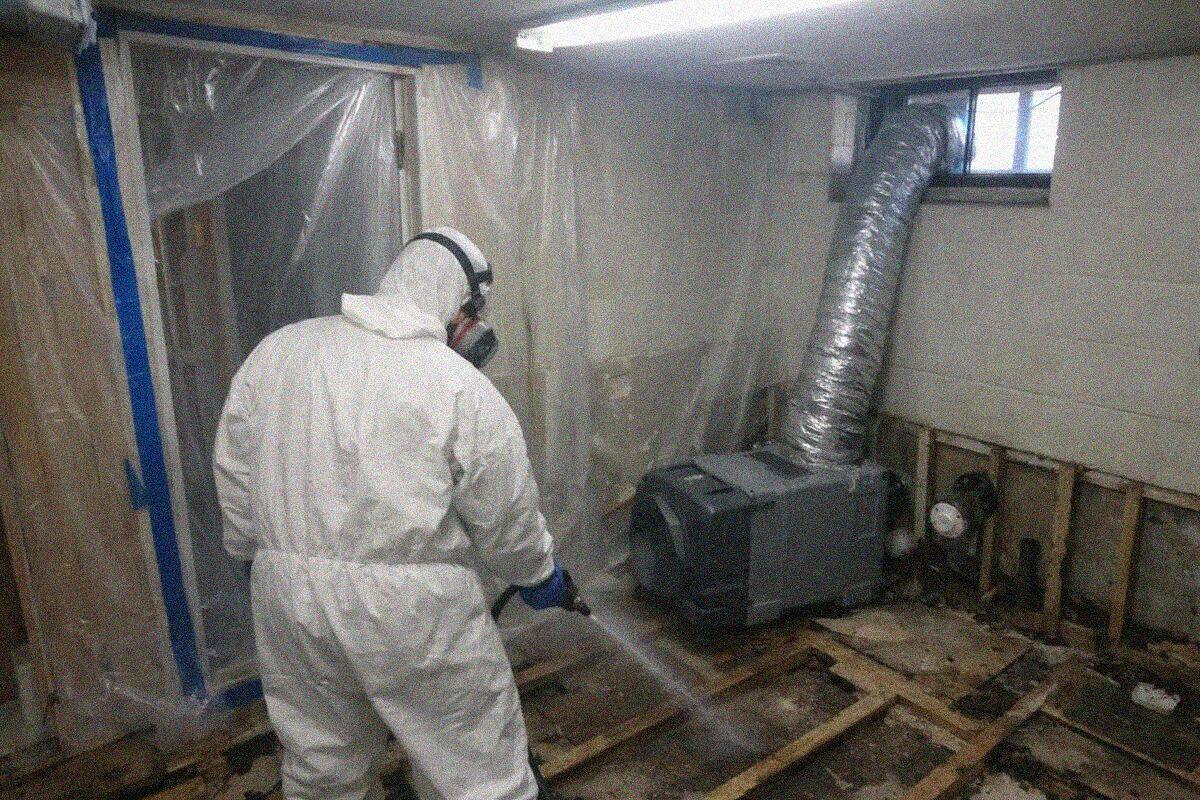
A sewage cleanup in an apartment building or a multi-family house is done under containment: plastic sheeting sealed across the doorways of the affected area, with a negative air machine pulling air out of it through a HEPA filter and ducting it outside through a window or a hatch. The pressure inside the containment is lower than the rest of the building, so air moves in through any gap and never out, and the aerosols the demolition raises stay where the crew is working in protective equipment.
The same containment keeps the smell and the contamination out of the hallway, the stairwell and the apartment upstairs, which is what the building will be worried about and what the certificate of insurance and the access plan describe. On a row house the containment is a doorway at the top of the cellar stair and a duct out through the hatch.
Once the removal and the cleaning are done and the surfaces have been treated, the negative air machine keeps running while air movers and a dehumidifier dry the slab and the framing, and the containment comes down when the readings hit the dry standard and the area has been cleaned a final time.
What You Should Not Do
Do not put a fan on it.
A household fan or an air mover on raw sewage aerosolizes what is on the floor and carries it through the apartment and up the stairwell, which turns a floor problem into an air problem for everyone in the building. The same goes for a household wet vacuum, which sprays fine droplets out of its exhaust, and for bleach poured onto carpet or drywall, which does nothing to the contamination inside the material and adds a chemical hazard in a closed room.
Stay out of the water. Sewer water carries bacteria, viruses and whatever chemicals went down every drain upstream, and it is an electrical hazard if it has reached an outlet or the panel. Switch the circuits off from a dry spot, close the door on the affected room, and open a window in it if you can do so without walking through the water. Move people with asthma, small children and anyone elderly out of the apartment until the containment is up, since the Asthma-Free Housing Act exists because damp and mold in the city's housing hit those groups hardest.
Do not run water. Every flush and every load of laundry adds to what is coming up the drain until the line is clear or the surcharge has passed. And do not throw anything out before it has been photographed, because the disposal list is what the carrier and the landlord will want to see.
Building Logistics for a Sewage Job
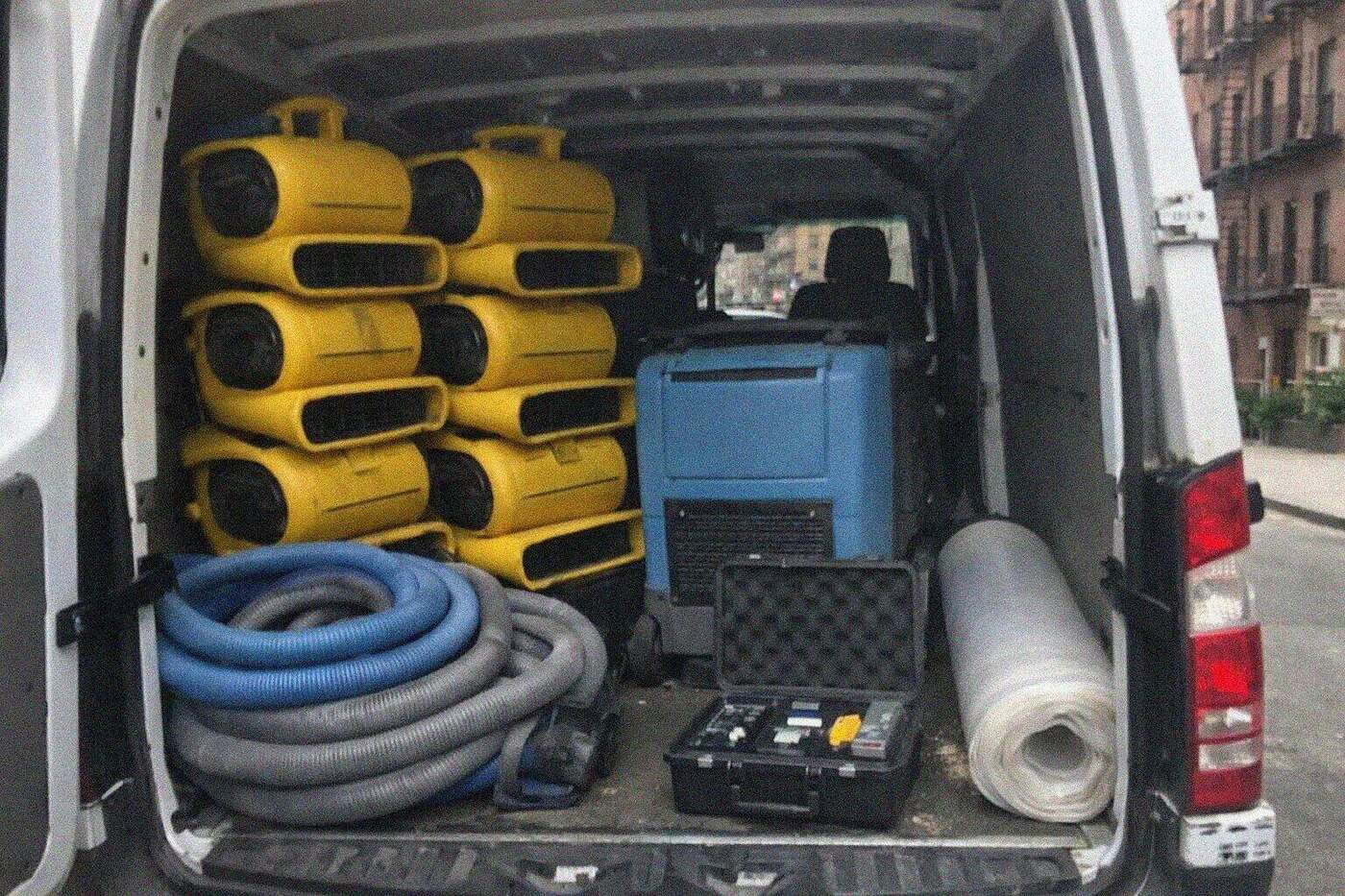
In an apartment building a sewage backup lands on the lowest apartments and the cellar, and the super, the managing agent and the board are in it from the first hour. The contractor we dispatch sends the certificate of insurance and an access plan to management before the crew comes in, with the equipment list including the negative air machine and where it will duct to. Sealed waste goes out by the route the super agrees, usually the service entrance or the freight car at a set time, and never through a passenger elevator during the morning rush.
The cellar is often where the boiler, the compactor room and the laundry sit, and a backup there takes building services out until it is cleaned. The board will want a written scope by area so it can separate the common-area cleanup on the master policy from any apartment cleanup on a resident's HO-4 or HO-6, and the crew writes it that way.
On a one- or two-family house the contractor we dispatch holds the NYC DCWP Home Improvement Contractor license, the plumber holds the Licensed Master Plumber license, and the containment is at the cellar door with the duct out through the hatch. The van needs the curb for the unload and the bagged waste needs a place to wait if the van has had to move.
What Drives the Cost of Sewage Cleanup in NYC
Published 2026 national cost surveys from Angi and HomeGuide put Category 3 mitigation at roughly $6.50 to $9.50 per square foot, above the general water mitigation range, and New York sits at or above the top of it.
Category 3 costs more than clean-water work because material is removed and disposed of as contaminated waste rather than dried in place, the crew works in protective equipment under containment, and the surfaces are cleaned and sanitized before the drying even begins. Rebuilding what came out is a separate figure on top of the mitigation and is usually the larger of the two on a finished basement.
The drivers are the spread, whether the space was finished or bare, how long the water sat before it was reported, whether more than one apartment is involved, and what the building needs in the way of containment and waste routing. A backup that reached a bare cellar floor and was reported the same morning is a modest job. One that filled a finished basement apartment overnight, soaked the drywall in three rooms and the contents of a family, and needs a duct run through a lobby to the street is a large one, and the plumber's line repair and the backwater valve sit alongside it as their own invoices.
Whoever attends writes a scope with the affected area, the materials to be removed, the containment plan, the equipment and the expected drying days, and lists the disposal so the sewer backup endorsement on a policy has something to respond to.
Signs a Sewer Backup Is Coming or Has Started
A backup gives a few minutes of warning, and knowing the signs is the difference between a wet floor drain and a wet apartment.
Gurgling from the toilet or the tub drain
Air being pushed back through the trap by rising water in the line. If it gurgles in the rain, the sewer is surcharging.
Water rising in the tub when the toilet is flushed
The line is blocked below the point where the two join. Stop using water and call a plumber.
A smell of sewer gas in the cellar
The house trap has run dry or is blocked, or the water has already come up the floor drain and gone down again.
Water at the floor drain that is gray or carries solids
A backup, whatever the storm looks like outside. Keep everyone out of it.
Several fixtures draining slowly at once
One slow drain is a local clog. All of them at once is the house trap or the service line.
How a Sewage Backup Call Runs in New York
Stop, report, keep out
Whoever answers asks which fixture it came from and whether it has stopped, and walks you through the 311 report to DEP so the main gets checked within its six-hour standard. Nobody goes into the water.
Containment and COI
The crew arrives with the certificate of insurance already with management, seals the affected area and sets a negative air machine ducted to the outside.
Remove the contaminated material
Carpet, pad, cut drywall, insulation and soaked contents go out in sealed bags, photographed and listed for the carrier and the building.
Clean, sanitize, then dry
The slab, walls, drains and trap cleanouts are cleaned and treated, and air movers and a dehumidifier run under the containment until the readings hit the dry standard.
Plumber, valve, scope
A Licensed Master Plumber clears or repairs the private side of the line and fits a backwater valve where one is wanted, and the written scope separates the cleanup from the plumbing and the rebuild.
Water in the Apartment Right Now?
Tell us what has happened and where, and we will get the response moving. If water is still coming in, find the shutoff or call the super first.
The phone is picked up 24 hours a day, seven days a week, on every holiday in the year.
Why New Yorkers Call This Number
Category 3 Rules From the IICRC S500 Standard
Anything that came up a drain is treated as contaminated: porous material out, non-porous surfaces cleaned and sanitized, then dried. The order never changes on a job we route.
Containment With HEPA Negative Air
The affected area is sealed and kept under negative pressure with the exhaust ducted outside, so the demolition does not put sewer aerosols into the stairwell or the apartment above.
The DEP Route Before the Plumber
DEP inspects a backup report within its six-hour standard and issues a Notice to Repair only when the fault is private. Making that report first keeps a city repair from turning into your invoice.
A typical sewage backup call in Morris Park
The situation: a two-family house on a side street off Morris Park Avenue in the Bronx has a slow cellar floor drain for a month, then an evening downpour puts two inches of gray water across the cellar floor and into the finished laundry and playroom the family built at the back.
What gets done: the owner switches the cellar circuits off from the first floor and makes the 311 report. DEP checks the main and finds it clear, and a Notice to Repair follows for the service line. The contractor we dispatch seals the cellar stair door, sets a negative air machine ducted out through the hatch, removes the carpet, the pad, the bottom two feet of drywall and the soaked toys and boxes, then cleans and sanitizes the slab, the block walls, the drain and the house trap cleanouts. Air movers and a dehumidifier run for the week under containment. A Licensed Master Plumber snakes the line, finds the grease and root blockage under the front yard, and fits a backwater valve.
The result: the cellar reads dry on daily logs by the end of the week, the family has a scope and a photographed disposal list for the sewer backup endorsement on their policy, and the valve means the next surcharge on the block stays in the street.
Before you let anyone open a wall
A short checklist for hiring a water damage contractor in New York City: the licenses to look up, the warning signs, and the four documents to ask for on any job.
Questions New Yorkers Ask
How fast can someone get here for a sewage backup?
The line is answered 24 hours a day, every day of the year, and dispatch starts on the call. Arrival depends on where you are and the traffic, and on a storm night the crew may be working several blocks in the same neighborhood. Until they arrive, keep everyone out of the water, switch off the circuits from a dry spot, and make the 311 report.
Who do I call first, you or the city?
Make the 311 report to DEP first or at the same time, because DEP inspects within its six-hour standard and decides whether the fault is in the city main or on your side. The cleanup inside can begin before that answer comes. A plumber who clears the line before DEP has looked can leave you paying for a repair that was the city's.
Can I clean up a small backup myself?
A cup of water at a floor drain on bare concrete, with gloves, boots, a disinfectant and the windows open, is within reach. Anything that spread onto carpet, drywall, a finished floor or contents is Category 3 work under the IICRC standard, and household gear spreads it around the room instead of removing it. If in doubt, close the door and call.
Will insurance cover a sewer backup?
DEP notes that most standard homeowner policies exclude sewer backup, and a sewer backup endorsement has to be added for the policy to respond. In an apartment building the master policy may cover the common areas and a resident's HO-4 or HO-6 with the endorsement may cover the apartment. The scope, the photographs and the 311 request number are what any of those carriers will ask for.
Do I need a backwater valve?
If the sewer has come up your drain once in a storm, it will again, and DEP recommends a backwater valve fitted in consultation with a plumber. It goes on the house side of the trap, needs a Department of Buildings permit through a Licensed Master Plumber, and wants a look inside every year or so to make sure the flap is clean.
Can the drywall be dried instead of removed?
On sewage, no. Under the Category 3 rules drywall that wicked contaminated water is cut above the wet line and removed with the insulation behind it, because the paper face and the gypsum hold what came up the drain and cannot be cleaned inside. Concrete, block and solid framing behind it are cleaned and kept.
Related Services
Basement and Cellar Flooding
Below-grade units, sidewalk hatches and finished basements in row houses, where every storm finds a way in.
Read more →Storm and Flood Damage Cleanup
Cleanup after a cloudburst overwhelms the street drains or coastal water reaches the block.
Read more →Mold Remediation
Containment, removal and clearance under the New York State mold licensing law, with the assessor kept separate.
Read more →All 14 services are listed on the services page. How the process runs end to end is on the home page, and the about page explains what to expect from whoever attends.