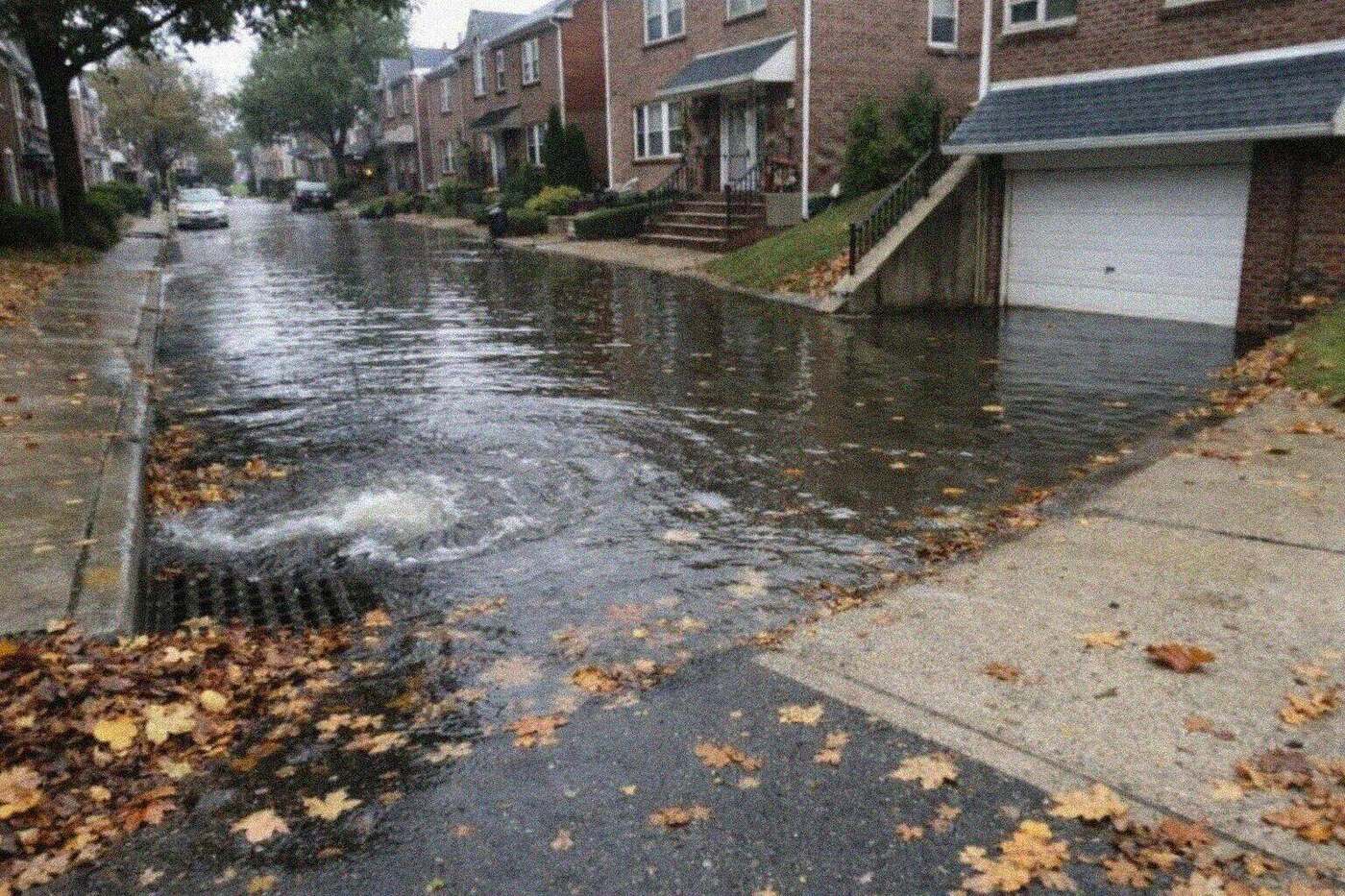
Storm and Flood Damage Cleanup in New York City
After the rain beats the sewers or the harbor comes over the bulkhead, the cleanup is a different job from a leak.
Storm and flood damage cleanup in New York deals with two kinds of water. Cloudburst flooding happens when rain falls faster than the sewers were built to take it, as it did when the remnants of Hurricane Ida put 3.47 inches on Central Park in one hour against a sewer design capacity of 1.75 inches per hour, according to the NYC Department of Health's flooding data story. Coastal flooding happens when a storm pushes the harbor over the bulkheads into the 100-year floodplain, where Rebuild by Design counts 1.3 million residents living in or beside it. Both bring water into the house that is treated as contaminated from the start.
The line is answered at any hour, and on a storm night it is answered while the rain is still falling. Tell whoever picks up whether the water came from the street, the sewer or the shore, how deep it got and whether anyone lives below grade, and the crew is dispatched with the pumps and the protective gear the answer calls for.
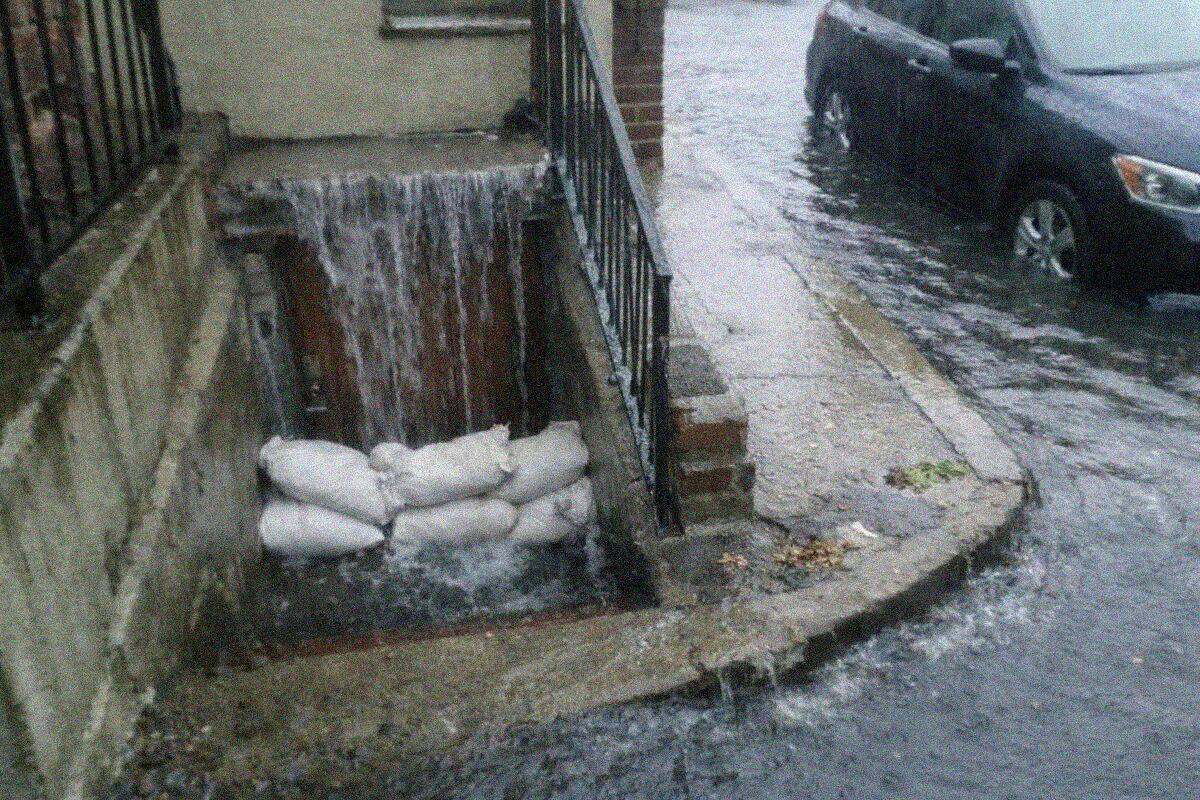
Cloudburst Flooding and Coastal Flooding Are Different Events
A cloudburst flood arrives in an hour and drains away in a few more, and it can happen anywhere in the city with a low block and a combined sewer, miles from the water. The rain beats the pipe, the street fills, the sidewalk hatches and areaways take it, and the sewer comes back up the floor drains at the same time. The Ida remnants on the first of September 2021 were the worst case on record, with the Department of Health recording fourteen deaths in the city, ten of them by drowning in basement apartments, most of those in Queens.
A coastal flood is forecast days ahead and hits a mapped area: the East Shore of Staten Island, the Rockaways, Red Hook, Canarsie, Lower Manhattan and the other neighborhoods inside the 100-year floodplain. The water is salt, it rises over hours, it carries fuel, sewage and debris off everything it crosses, and it can stand in a cellar for a day. Sandy in 2012 killed 52 people in the city, 36 of them by drowning, and the Rebuild by Design floodplain count expects the 1.3 million residents in or near the floodplain to grow to 2.2 million by 2100.
The cleanup differs in scale more than in kind. Both are Category 3 water under the IICRC S500 standard. The coastal version adds salt, which corrodes wiring and fasteners and stays in the block and the concrete, and it usually arrives with a power cut that lasts days, which changes what equipment can run and when.
What Ida Showed About Basement Apartments
The Department of Health's account of Ida puts ten of the city's fourteen deaths in basement apartments, and the federal aid figures show how many households were hit.
FEMA reported that within three months of the storm it had approved $173.3 million in Individual Assistance for about 36,000 New Yorkers, and that the National Flood Insurance Program had paid $93.5 million on 2,753 claims in the city over the same period. The neighborhoods with the heaviest damage were Flushing, Elmhurst, Jamaica and Hollis in Queens, along with parts of central Brooklyn and the Bronx, most of them blocks of one- to three-family houses with basement units.
A basement apartment floods from two directions at once, through the exterior stair and through the drains, and the single exit is often the stair the water is coming down. The Comptroller's 2022 report puts 43,000 of the city's 424,800 basements and cellars at flood risk now, rising to 136,200 by the 2050s. For the occupants the advice is to leave early when a flash flood warning is issued, and for the owner it is a backwater valve, a sump with battery backup, a sealed hatch and a second means of egress, all of which the basement page covers in detail.
Flood Insurance Claims by Borough
Flood is excluded from almost every standard homeowner policy, and the National Flood Insurance Program is where most New York flood claims go. The OpenFEMA NFIP claims dataset records the claims on file for each borough across all years, and the pattern follows the coastline.
| Borough | Claims on record |
|---|---|
| Staten Island | 19,419 |
| Queens | 14,917 |
| Brooklyn | 6,304 |
| The Bronx | 1,945 |
| Manhattan | 1,493 |
Staten Island's East Shore and the Queens shoreline from the Rockaways to Howard Beach carry the bulk of the record, most of it from Sandy. Queens logged 308 NFIP claims in 2021 alone, the Ida year, which shows how a cloudburst reaches households that never thought of themselves as being in a flood zone. An NFIP policy has a 30-day waiting period before it responds, so the time to buy one is before the forecast.
For a claim, the carrier wants the water line photographed on the wall, the entry point, the contents that were discarded and the written scope from whoever attended. The crew that attends takes those photographs before anything comes out, and separates storm water from any sewer backup in the scope, since the two are treated differently by a homeowner policy with a backup endorsement.
What a Flood Cleanup Involves That a Leak Does Not
A flood brings the outside in, and the cleanup has to deal with silt, contamination, salt, fuel and a building that may have lost power and gas.
A leak inside the house is clean water in a known place. Floodwater has crossed the street, the sewer and whatever was in the cellar next door, and under the IICRC S500 standard it is Category 3 from the moment it enters. That means carpet and pad out, drywall cut above the water line and removed with its insulation, particleboard and laminate out, and upholstered contents and mattresses that sat in it disposed of. Tile, block, concrete and solid framing are cleaned, sanitized and kept.
Silt and mud come first. Floodwater drops a layer of fine sediment on every surface it covered, and that layer holds moisture and contamination against the floor and the walls until it is shoveled and washed out. Sanitizing over silt achieves nothing. On a coastal flood the salt has to be washed off the block and the concrete too, because it draws moisture out of the air for years and corrodes anything metal it touches.
Then the utilities. A boiler, a water heater, a gas meter or an electrical panel that sat in floodwater is switched off and stays off until the utility or a licensed tradesperson has inspected it, and the crew will say so before anyone tries to relight a pilot. Wiring that was submerged is generally replaced. A flooded oil tank is a spill until proved otherwise. None of that applies to a burst pipe upstairs, and it is why a flood job has a plumber, an electrician and sometimes an oil-burner technician alongside the cleanup crew.
- Pump and extract standing water, with the power off to the space from a dry point
- Photograph the water line and the entry points before anything is moved
- Shovel and wash out silt and debris, salt included on a coastal flood
- Remove porous material that contacted the water under the Category 3 rules, bagged and listed
- Clean and sanitize the slab, the block and the framing, then the drains and the sump
- Dry with air movers and dehumidifiers until the readings meet the dry standard, then rebuild
Drying a Flooded Building
Once the water, the silt and the contaminated material are out, a flooded cellar or ground floor is a large wet mass of concrete, block and framing, and drying it is a matter of dehumidifier capacity and days. A restoration dehumidifier pulls the moisture the air movers lift off the surfaces out of the air and drains it away, and the size of the machine is matched to the volume of the space and how wet it is. On a coastal flood with the power out, the crew runs on a generator or waits for the utility, which is one reason a Sandy-scale cleanup took weeks in some blocks.
The video below is from the manufacturer of the dehumidifiers most crews carry and explains what the machine does and how it is sized to a room. It is the clearest short explanation of why the equipment stays for days after the floor looks dry.

Video: Legend Brands on what a restoration dehumidifier does and how it is sized.
FloodHelpNY and the DEP Stormwater Flood Map
Two city resources show whether your block is exposed and what to do about it before the next storm.
FloodHelpNY, run with the city's support, lets you look up an address for its flood zone, its insurance picture and the steps that lower the risk, and it explains the NFIP in plain terms. DEP's stormwater flood map shows the streets that are expected to flood in three rain scenarios: a moderate rain of about 2.13 inches per hour, an extreme rain of about 3.66 inches per hour with the sea level of the 2080s, and a limited scenario at 1.77 inches per hour that is close to the sewer design figure. If your block is blue on the moderate map, the measures on the basement page are worth doing this year.
FEMA's flood insurance rate maps for the city are in the middle of a long update, so the current maps understate the risk on some blocks and the preliminary maps show more of the city inside the floodplain. An address that is outside the mapped zone today may be inside it when the update lands, and a cloudburst pays no attention to either.
Building Logistics After a Storm
On the night of a flood every crew in the city is busy, streets are closed, and the block that flooded may have no power. The crew that attends works the pumping first, house by house, and the removal and drying follow as access and power allow, with the order of work agreed with you on arrival. A generator runs the pumps and the negative air; the dehumidifiers wait for the utility if the outage is short and run on a generator if it is long.
On a one- or two-family house the contractor we dispatch holds the NYC DCWP Home Improvement Contractor license, and the plumber, the electrician and any oil-burner work are separate licensed trades with their own invoices. In an apartment building, the certificate of insurance and access plan go to management as usual, the cellar and the lowest apartments come first, and the waste route through the building is agreed with the super before the first bag moves. Contaminated debris at the curb has to be bagged and the Department of Sanitation gives instructions for storm debris pickup after a major event.
A coastal flood adds the salt wash, the wiring inspection and the oil tank check, and the rebuild afterwards often includes raising the boiler, the panel and the outlets above the flood line, which is where the reconstruction page and FloodHelpNY's mitigation advice meet.
What Drives the Cost of Flood Cleanup in NYC
Angi and HomeGuide's 2026 national cost surveys put Category 3 mitigation at roughly $6.50 to $9.50 per square foot, above the general $3.75 to $7.50 water mitigation range, and a New York flood cleanup sits at or above the top of it.
Floodwater costs more than a leak to clean up because material is removed and disposed of as contaminated waste, silt and salt are washed out before anything is sanitized, the crew works in protective equipment, and the utilities have to be inspected before the building can be lived in. The rebuild is a separate figure on top of the mitigation and is the larger of the two on any finished space.
The drivers are the depth and the time the water stood, whether the space was finished or bare, how much silt came in, whether the mechanicals and the wiring were submerged, whether the flood was fresh or salt, and how long the power was out. A cloudburst that put four inches on a bare cellar floor for an hour is a modest job. Salt water standing for a day in a finished basement apartment with the boiler, the panel and an oil tank in it is a large one with four trades on it.
Whoever attends writes a scope with the flooded area, the water line, the materials to be removed, the equipment and the expected drying days, and separates the mitigation from the plumbing, the electrical and the rebuild so an NFIP claim and any FEMA application have the documents they ask for.
Signs Your Block Floods in a Cloudburst
The street tells you before the cellar does.
The corner catch basin ponds in an ordinary rain
A basin that backs up in a light rain is blocked or undersized, and in a cloudburst that corner becomes a pond that runs down every hatch on the block.
Your block is blue on the DEP moderate stormwater map
The map shows where the model expects water in a rain of about 2.13 inches per hour. Blue means a backwater valve and a sump this year.
The cellar floor drain gurgles when it rains
The combined sewer is surcharging and pushing air back through your trap. Water follows the air.
Water reaches the top of the areaway or the hatch in a storm
Once the water is level with the sidewalk, the hatch seal is all that stands between the street and the cellar.
Neighbors have sandbags or flood doors out
They have been through it. Ask them what got in and where.
A tide line on the foundation from a previous flood
The water has stood here before, and the height of the line is the depth to plan for.
How a Storm and Flood Call Runs in New York
The call on the night
Whoever answers asks the source, the depth, whether anyone is below grade and whether the power is off. If the water is still rising, the advice is to get out of the basement and wait for it to stop.
Pump, photograph, cut the power
Standing water is pumped with the circuits off, and the water line, the entry points and the contents are photographed before anything is moved.
Silt out, material out
Silt and debris are shoveled and washed out, and porous material that contacted the water goes out in sealed bags under the Category 3 rules, listed as it leaves.
Clean, sanitize, dry
The slab, block and framing are cleaned and treated, salt washed off on a coastal flood, and air movers and dehumidifiers run until the readings hit the dry standard.
Trades, scope, prevention
The plumber, the electrician and any oil-burner work are routed as separate licensed trades, and the written scope separates mitigation from rebuild and names the measures that keep the next storm out.
Water in the Apartment Right Now?
Tell us what has happened and where, and we will get the response moving. If water is still coming in, find the shutoff or call the super first.
The phone is picked up 24 hours a day, seven days a week, on every holiday in the year.
Why New Yorkers Call This Number
Category 3 Handling on Every Flood
Street, sewer and coastal water are treated under the IICRC S500 Category 3 rules from the first minute: silt out, porous material out, surfaces cleaned and sanitized, then dried on daily readings.
Licensed Trades Alongside the Cleanup
A NYC Licensed Master Plumber for the line and the valve, a licensed electrician for submerged wiring, and the DCWP Home Improvement Contractor license on the contractors we dispatch to one- and two-family homes.
Photographs Before Anything Moves
The water line, the entry point and the discarded contents are recorded before the pumps start, because an NFIP claim and a FEMA application both ask for them and neither can be reconstructed afterwards.
A typical storm flooding call in Flushing
The situation: a semi-detached house on a low block south of Kissena Park takes an evening cloudburst that puts the street under a foot of water. The rain comes down the exterior stair into the basement apartment and up through the floor drain at the same time, and the tenant gets out up the interior stair with the water at knee height. The power to the block goes out an hour later.
What gets done: the owner reports the flooding to 311 and the contractor we dispatch arrives with a generator, pumps the basement with the panel off, and photographs the water line at thirty inches on the wall along with the stair and the drain. Silt is shoveled and washed out. Carpet, pad, the lower three feet of drywall, the kitchen cabinets and the tenant's soaked furniture go out in bags, listed as they leave. The slab, block and framing are cleaned and sanitized, and air movers and two dehumidifiers run on the generator until the utility restores power. An electrician inspects the submerged outlets and the panel, and a Licensed Master Plumber is arranged for a backwater valve and a sump with battery backup.
The result: the basement reads dry after a week and a half on daily logs, the owner has a scope and a photographed disposal list for the NFIP claim, and the tenant's HO-4 carrier has the same documents. The rebuild scope puts the outlets and the water heater above the recorded water line.
Before you let anyone open a wall
A short checklist for hiring a water damage contractor in New York City: the licenses to look up, the warning signs, and the four documents to ask for on any job.
Questions New Yorkers Ask
How quickly can someone get here after a storm?
The line is answered 24 hours a day, every day of the year, and on a storm night it is answered while it is still raining. Arrival depends on which streets are open and how many blocks flooded at once, and nobody will name a time. Get out of the basement while the water is rising, switch the power off from a dry spot once it stops, and photograph the water line before you move anything.
Is floodwater dangerous once it has drained away?
Yes. What it left behind is silt carrying whatever the water crossed, sewage from the surcharged drains, fuel from any flooded tank on the block, and on a coastal flood, salt. The IICRC standard treats it all as Category 3, and it is why porous material is removed instead of dried and why the crew works in protective equipment.
Will FEMA or my insurance pay for this?
A standard homeowner policy excludes flood; an NFIP or private flood policy covers the building and, if bought, the contents, with a 30-day wait before a new policy responds. After a federally declared disaster, FEMA Individual Assistance can help uninsured households, as it did for about 36,000 New Yorkers after Ida. The scope, the photographs of the water line and the disposal list are what any of those programs ask for.
Can I turn the power and the boiler back on myself?
Only after a licensed electrician has checked the panel and the outlets that were under water, and after the utility or a licensed technician has inspected a boiler, a water heater or a gas meter that was submerged. Submerged wiring is generally replaced. Relighting a pilot on a flooded boiler is a fire and carbon monoxide risk.
How do I find out if my block floods?
DEP's stormwater flood map shows the streets the model expects to flood in a moderate rain of about 2.13 inches per hour and an extreme one of about 3.66, and FloodHelpNY looks up an address for its flood zone and insurance picture. If either shows your block, a backwater valve, a sump with battery backup and a sealed hatch are the measures to fit before the next forecast.
What is different about a coastal flood cleanup?
Salt, and time. Coastal water stands longer, carries more fuel and debris, and leaves salt in the block and the concrete that has to be washed out because it holds moisture and corrodes metal for years. It usually comes with a power outage measured in days, so the drying runs on generators or waits, and the rebuild often raises the boiler, the panel and the outlets above the recorded water line.
Related Services
Basement and Cellar Flooding
Below-grade units, sidewalk hatches and finished basements in row houses, where every storm finds a way in.
Read more →Sewage Backup Cleanup
Category 3 water from a combined sewer surcharge or a blocked house trap, handled with containment and removal.
Read more →Structural Drying and Dehumidification
Air movers and dehumidifiers sized to the room, with readings taken daily until the plaster and joists are dry.
Read more →All 14 services are listed on the services page. How the process runs end to end is on the home page, and the about page explains what to expect from whoever attends.